Olyo
Designing a seamless way to split group travel expenses
- My Role
I was responsible for ux research, mapping user flows and designing the UX/UI of the app. My work included translating insights into wireframes and prototypes, shaping both the structure and the visual identity of the product.
- Project Outcomes
Olyo transforms the stressful process of cost sharing into something simple and seamless. It’s not just an expense tracker — it’s a tool for happier, more harmonious group travel.
PROJECT OVERVIEW
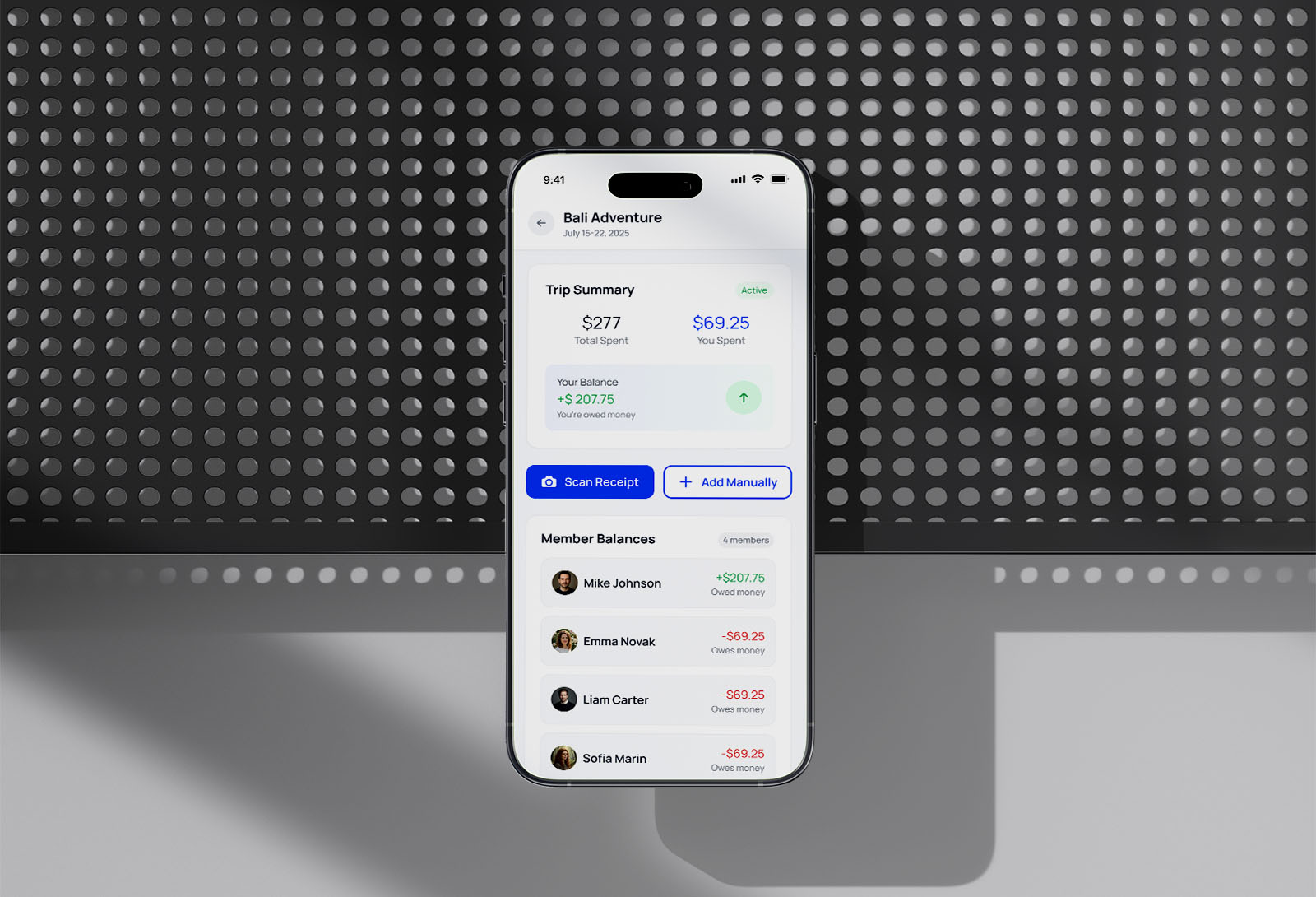
The goal was to create a seamless, stress-free way for travelers to track shared costs in real time, ensuring fairness and transparency for everyone involved.
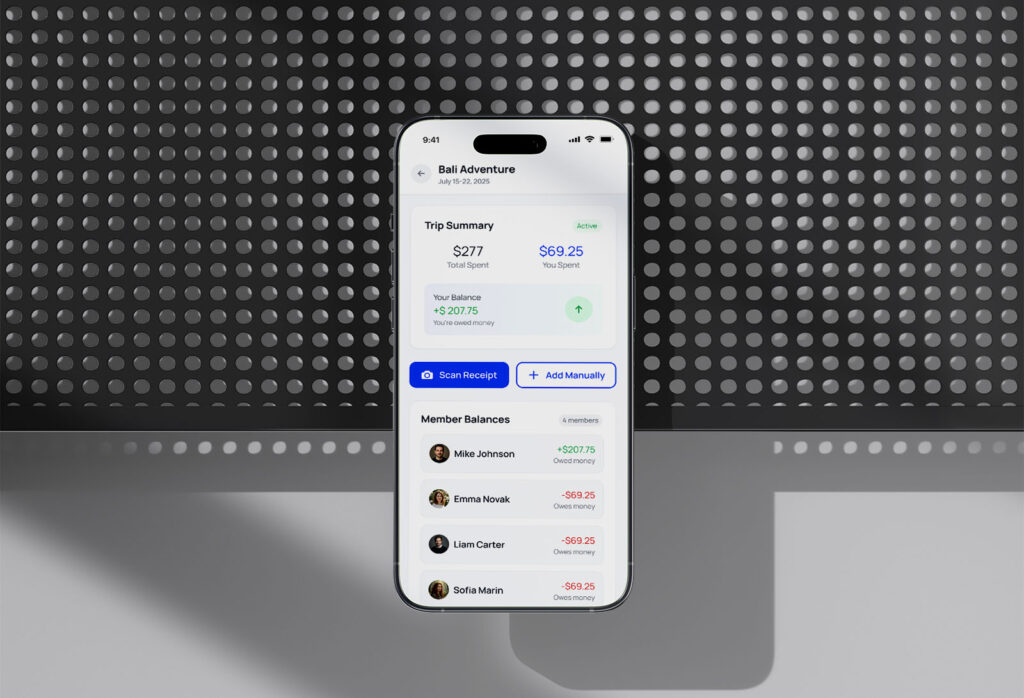
The goal was to create a seamless, stress-free way for travelers to track shared costs in real time, ensuring fairness and transparency for everyone involved.
During group trips, tracking shared expenses often turns chaotic. People lose receipts, forget who paid what, or feel awkward discussing money. Someone always ends up paying more, someone less — and in the end, the confusion overshadows the fun.
- “Who paid for the taxi?”
- “Did anyone save the receipt?”
- “I think it’s my turn next!”
This led to a simple but important question:
How might we help travelers keep track of their expenses in real time and split them fairly, so everyone can relax and enjoy the trip?
During group trips, tracking shared expenses often turns chaotic. People lose receipts, forget who paid what, or feel awkward discussing money. Someone always ends up paying more, someone less — and in the end, the confusion overshadows the fun.
- “Who paid for the taxi?”
- “Did anyone save the receipt?”
- “I think it’s my turn next!”
This led to a simple but important question:
How might we help travelers keep track of their expenses in real time and split them fairly, so everyone can relax and enjoy the trip?
An intelligent expense-sharing app that takes the stress out of settling costs.
Each traveler uploads their receipts – and Olyo’s AI does the rest:
- Scans and itemizes expenses, including tips
- Categorizes and records each transaction
- Keeps everyone updated instantly
An intelligent expense-sharing app that takes the stress out of settling costs.
.
Each traveler simply uploads their receipts — Olyo’s AI handles the rest:
- Scans and itemizes expenses, including tips
- Categorizes and records each transaction
- Keeps everyone updated instantly
Research
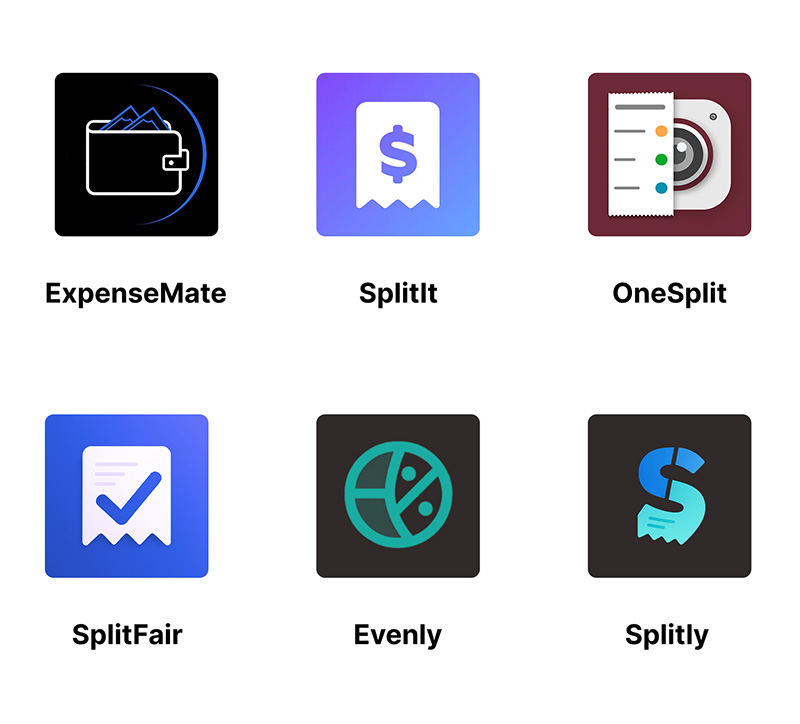
Examining competitors revealed a recurring pattern: most applications focus on the core functions of expense splitting — such as receipt scanning and balance tracking.
Although some solutions are designed specifically for travelers, they often fall short in the areas that matter most in real travel contexts: offline functionality, multi-currency and multilingual support, and a clear, easy-to-use interface.
.

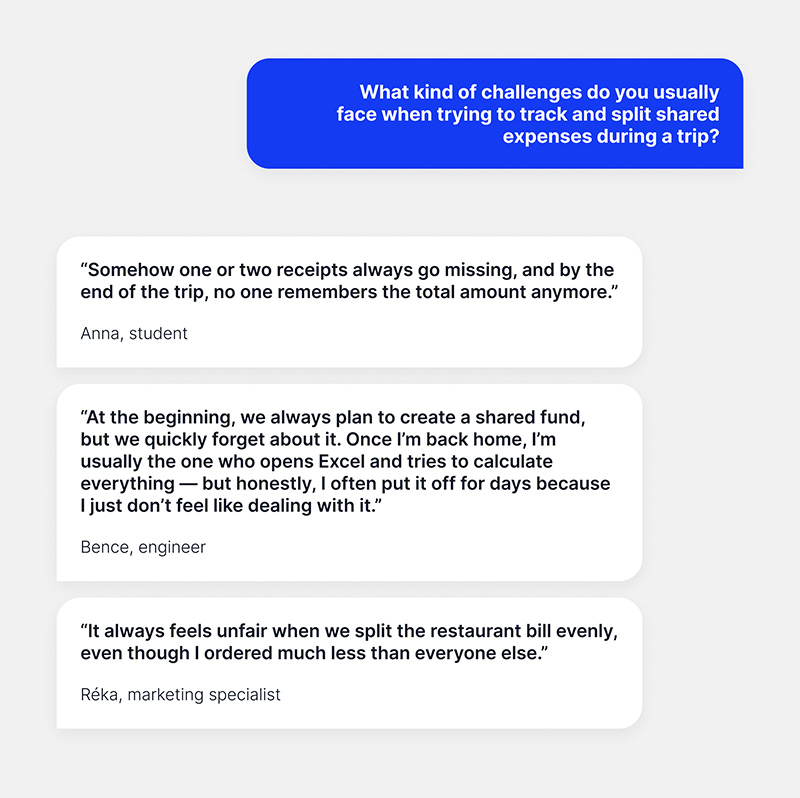
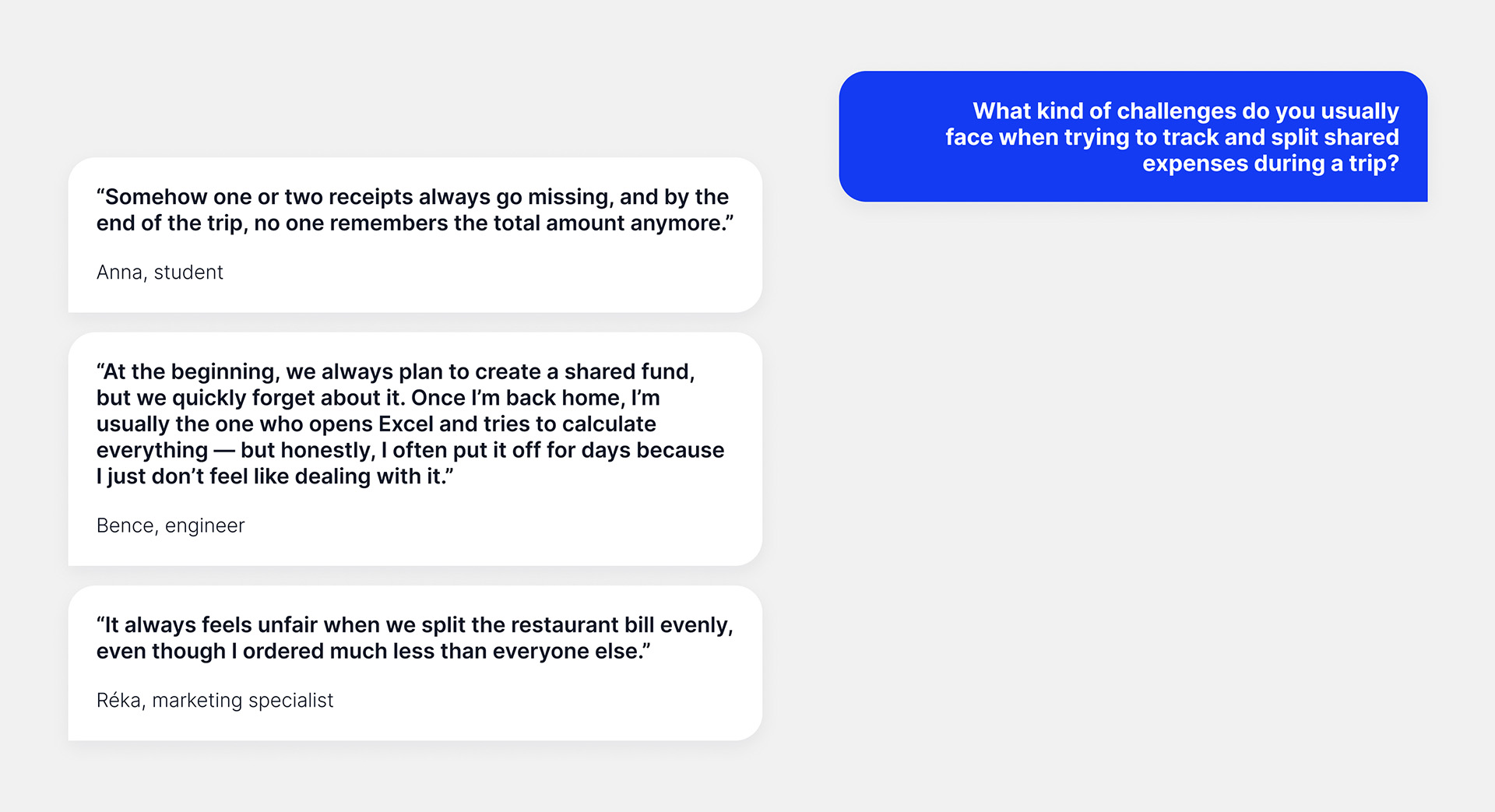
According to participants, tracking expenses while traveling is never easy. They try to keep receipts, make mental notes, or track who paid what — but in the excitement of the trip, things quickly get forgotten. Once home, it all turns into post-trip math and confusion, as they try to piece everything together.
.
According to participants, tracking expenses while traveling is never easy. They try to keep receipts, make mental notes, or track who paid what — but in the excitement of the trip, things quickly get forgotten. Once home, it all turns into post-trip math and confusion, as they try to piece everything together.
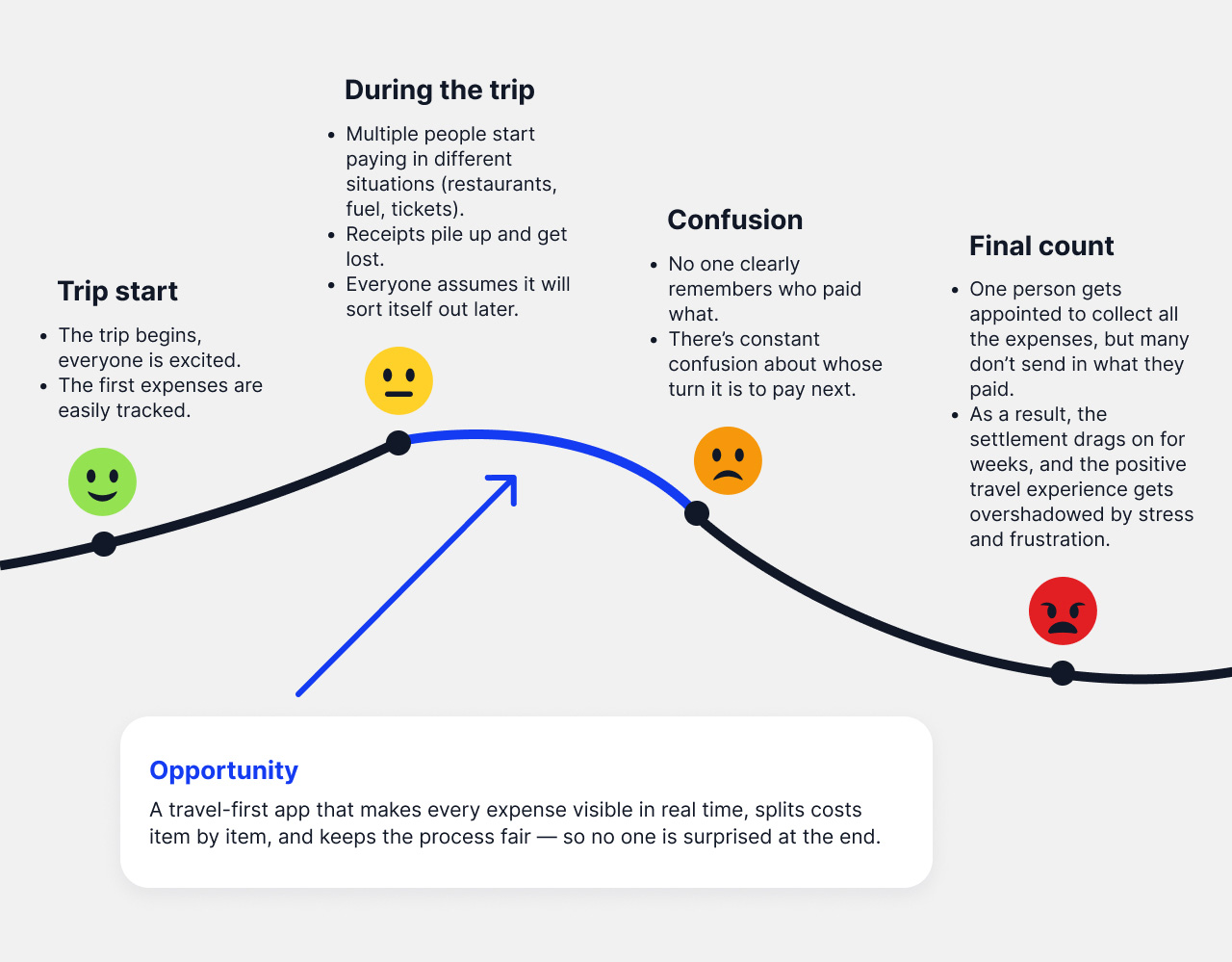
Since everyone pays for different things — sometimes one person, sometimes another — by the end, no one really knows who spent how much. This isn’t just caused by missing receipts or forgotten amounts, but also by the fact that spending habits vary widely between people at meals, activities, or events. As a result, the final settlement often feels chaotic and unfair for everyone involved.
If we can’t track who paid what, it becomes impossible to split expenses fairly.
Additional Key Findings
Fair splitting is difficult
Multiple currencies cause confusion
When a trip involves several different currencies, the constant conversions add unnecessary complexity and often lead to mistakes.
Since everyone pays for different things — sometimes one person, sometimes another — by the end, no one really knows who spent how much. This isn’t just caused by missing receipts or forgotten amounts, but also by the fact that spending habits vary widely between people at meals, activities, or events. As a result, the final settlement often feels chaotic and unfair for everyone involved.
.
If we can’t track who paid what, it becomes impossible to split expenses fairly.
Additional Key Findings
Fair splitting is difficult
Multiple currencies cause confusion

Sara
21, Student
Sara’s main goal is to make sure that expenses are split fairly based on actual consumption, not just evenly divided. She wants to track spending in real time during the trip to avoid unpleasant surprises or unnecessary tension afterward.

David
David doesn’t want expense tracking to become an extra burden. He’s not overly worried about every penny balancing out — he believes it evens out over time. For him, the key is clarity and transparency during the trip, so he doesn’t have to deal with complicated calculations after the trip.
Sara
21, Student
Sara’s main goal is to make sure that expenses are split fairly based on actual consumption, not just evenly divided. She wants to track spending in real time during the trip to avoid unpleasant surprises or unnecessary tension afterward.
David
David doesn’t want expense tracking to become an extra burden. He’s not overly worried about every penny balancing out — he believes it evens out over time. For him, the key is clarity and transparency during the trip, so he doesn’t have to deal with complicated calculations after the trip.
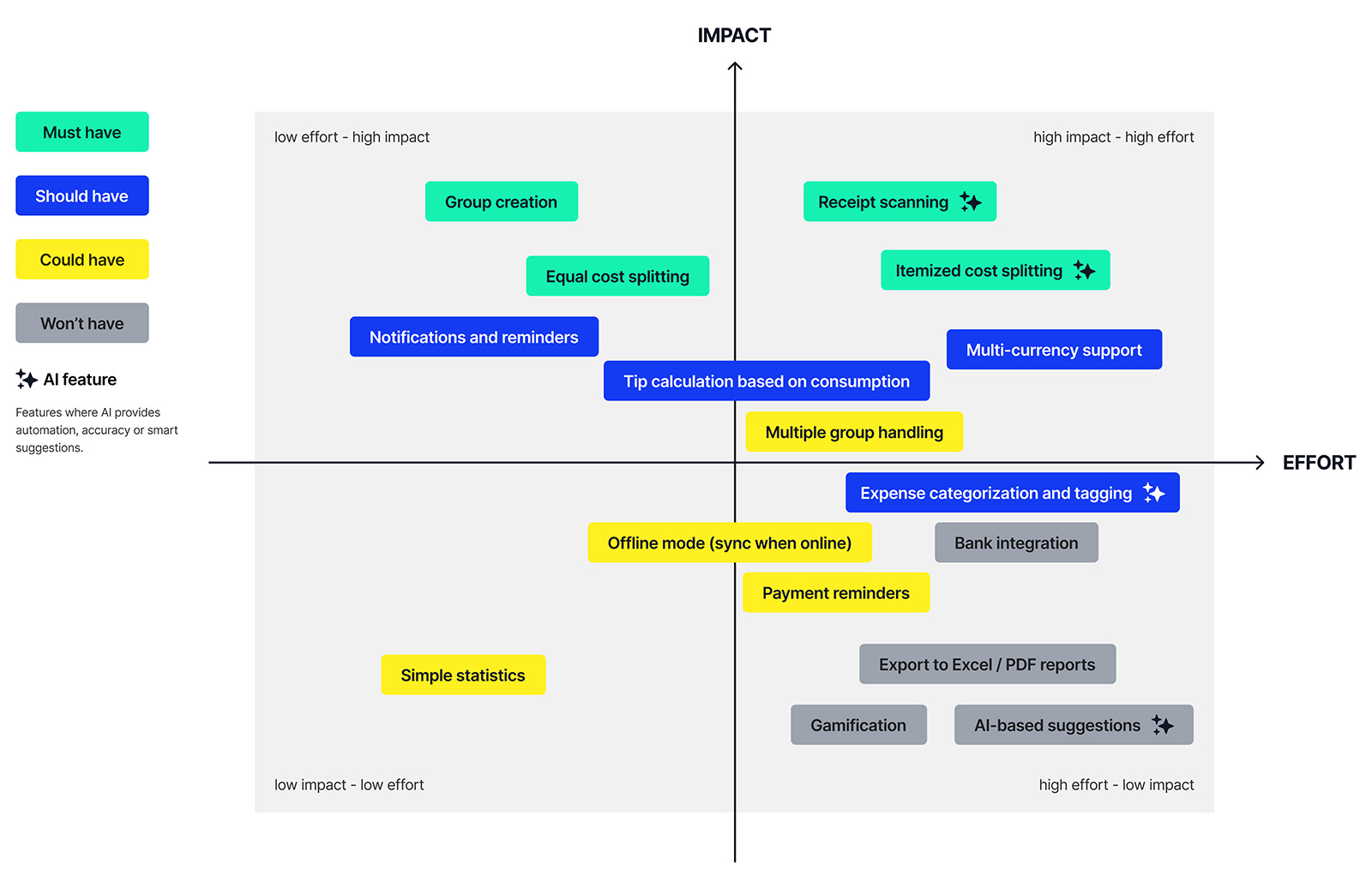
To organize the features, I applied two methods:
- The MoSCoW framework, which categorizes features based on their importance and necessity.
- The Impact–Effort matrix, which balances user value against implementation difficulty.
This process helped reveal which features would deliver quick wins and which would require long-term investment for greater user benefit.
To organize the features, I applied two methods:
- The MoSCoW framework, which categorizes features based on their importance and necessity.
- The Impact–Effort matrix, which balances user value against implementation difficulty.
This process helped reveal which features would deliver quick wins and which would require long-term investment for greater user benefit.
.
AI automatically detects the contents of receipts — items, prices, taxes, tips, and currencies — ensuring quick and accurate data input.
AI can assign individual items to people, calculate proportional tips, and handle spending differences, ensuring a fair and transparent split.
AI suggests categories (e.g., food, transport, accommodation), helping users keep their trip expenses structured and easy to review.
AI flags inconsistent or uncertain data, provides explanations, and increases transparency — helping build trust within the group.
.
AI automatically detects the contents of receipts — items, prices, taxes, tips, and currencies — ensuring quick and accurate data input.
AI can assign individual items to people, calculate proportional tips, and handle spending differences, ensuring a fair and transparent split.
AI suggests categories (e.g., food, transport, accommodation), helping users keep their trip expenses structured and easy to review.
AI flags inconsistent or uncertain data, provides explanations, and increases transparency — helping build trust within the group.
The final product
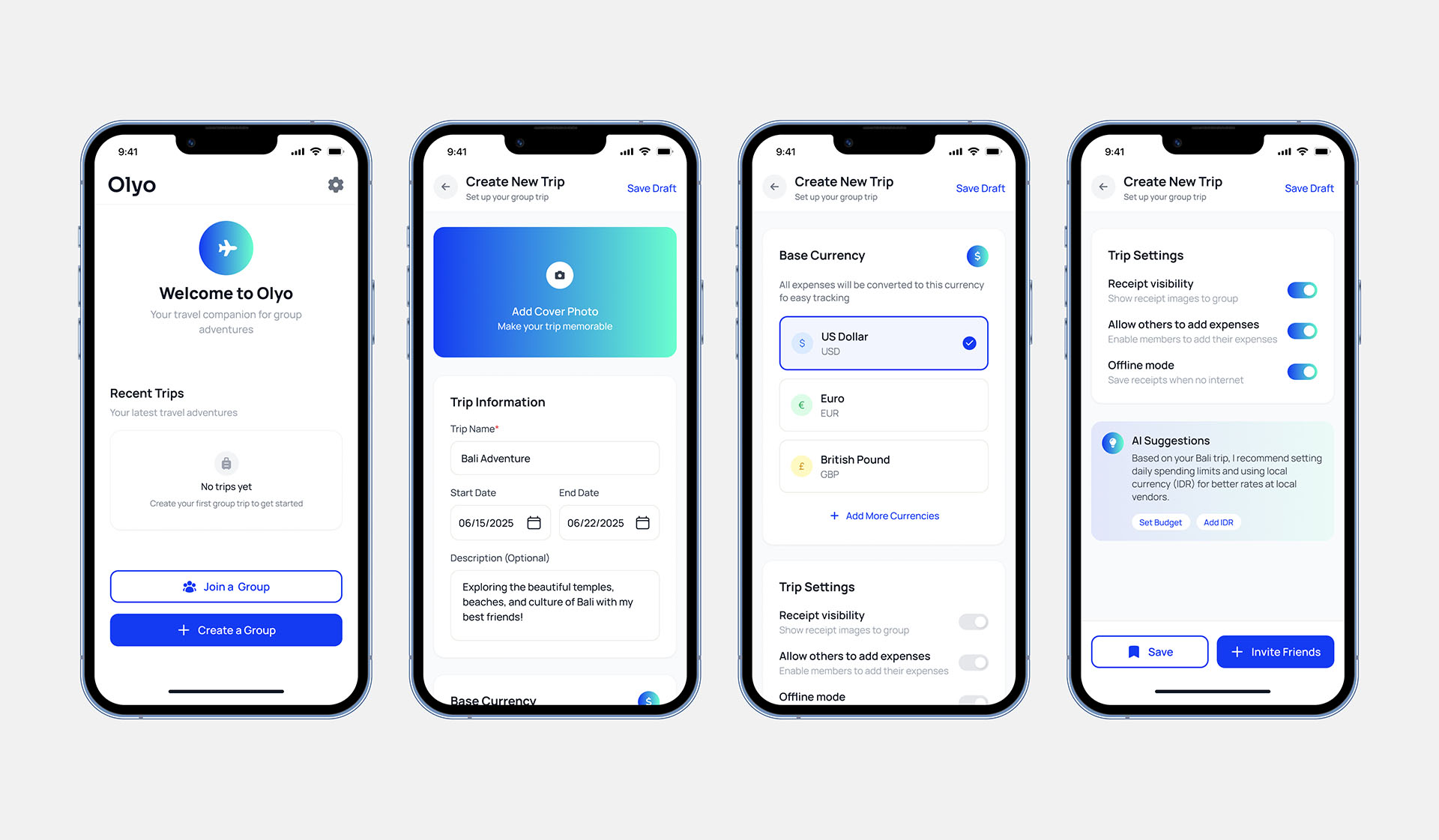
- Creating group
- Inviting friends
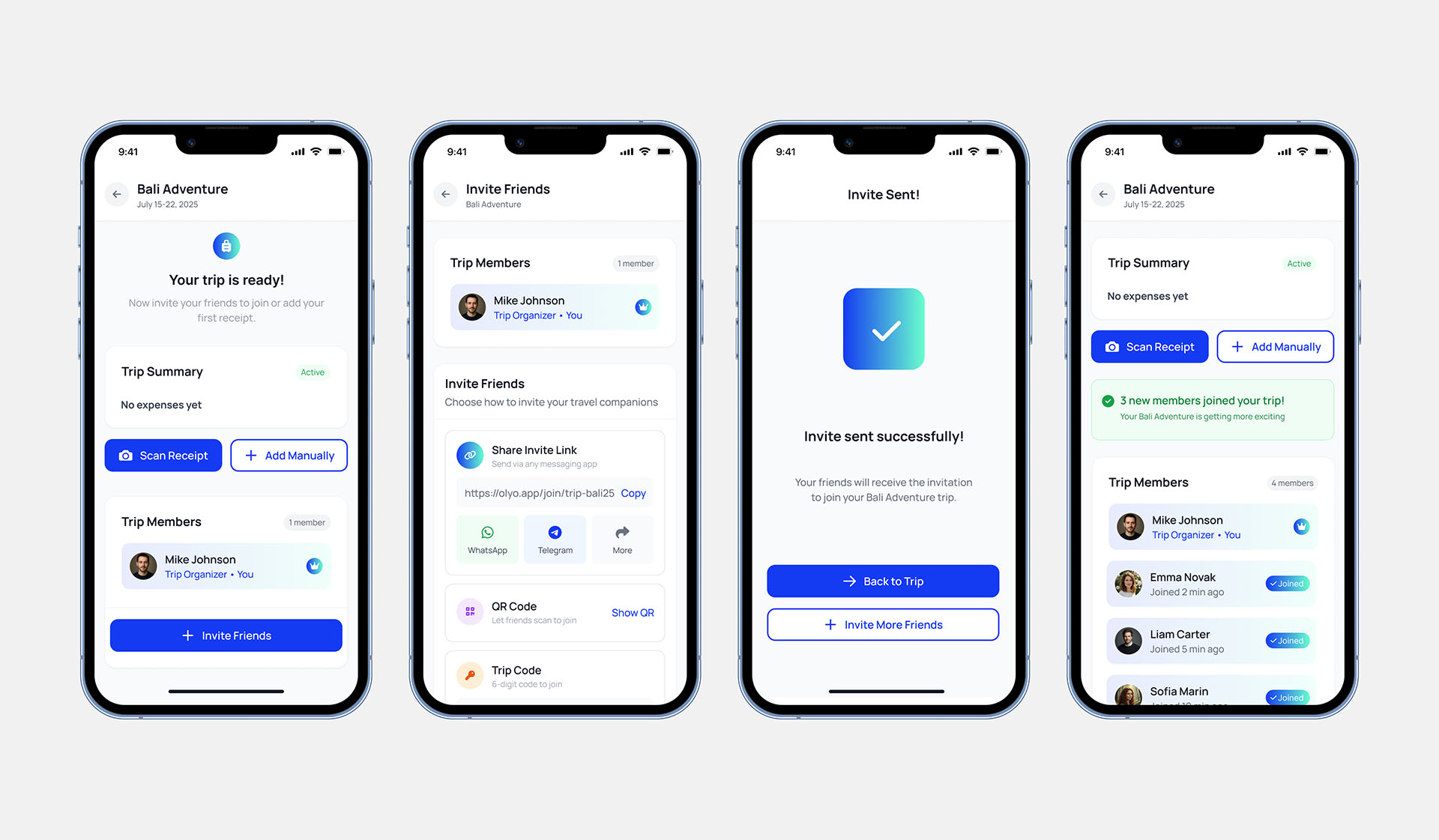
The invitation process is quick and flexible, letting users invite friends via link, QR code, or by entering a unique trip code in the app.
- Adding expenses (equal split)
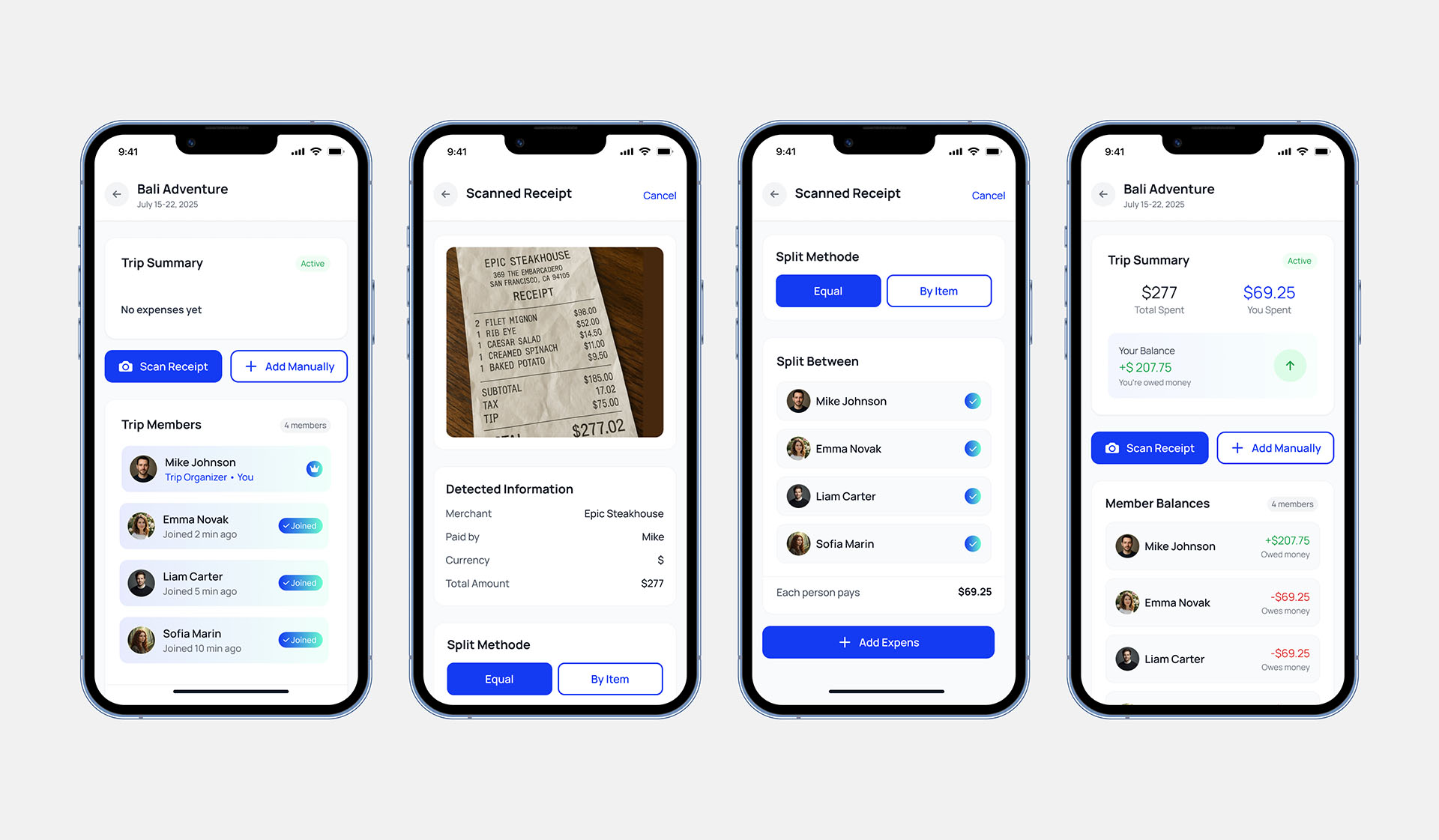
When scanning a receipt, the app automatically detects key details and evenly splits the total amount among all members for effortless balance tracking.
- Adding expenses (by item)
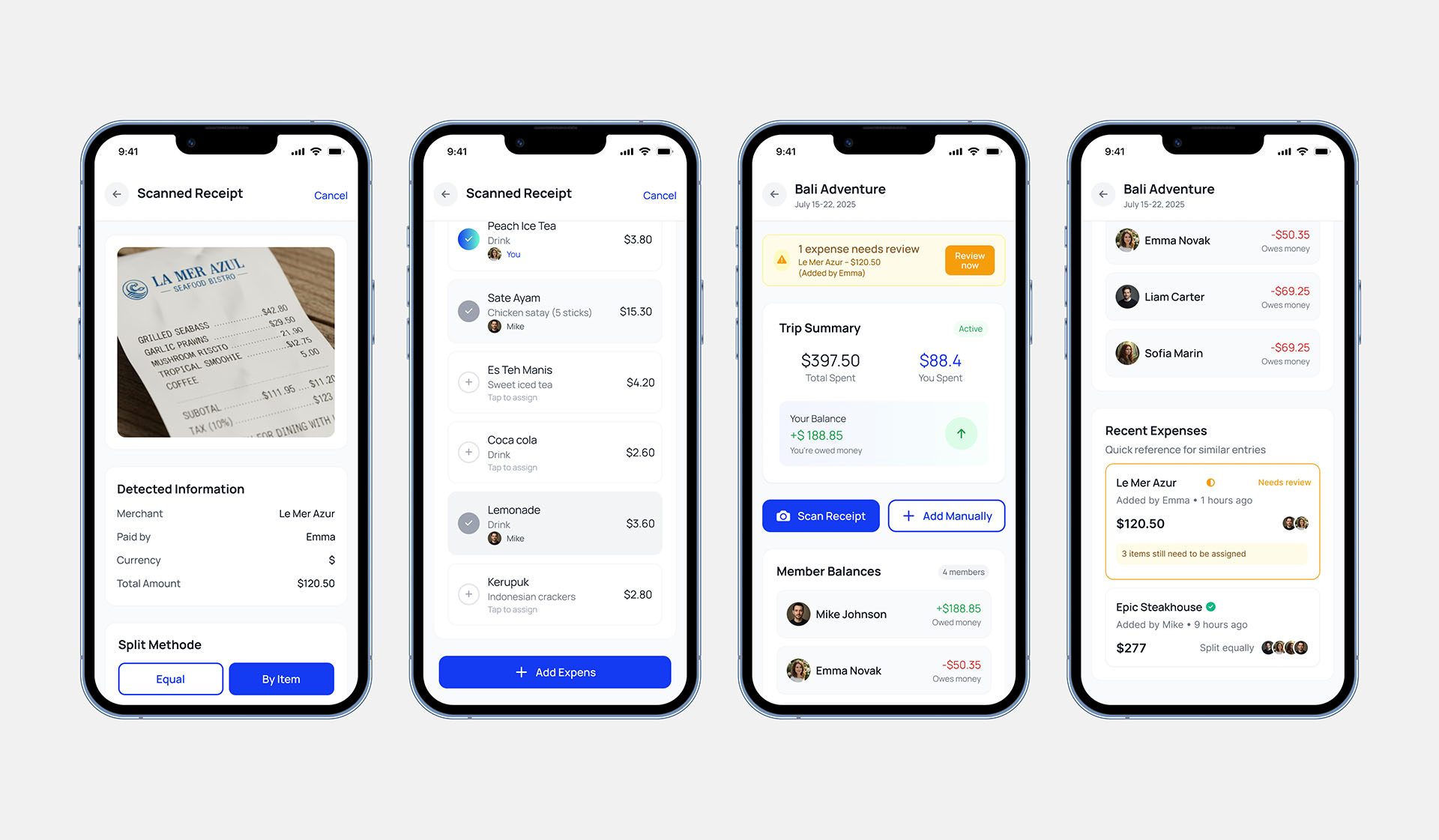
When scanning a receipt, users can assign each item to specific members, making it easy to split costs accurately based on what everyone ordered. The app highlights any unassigned items and lets other participants review and confirm their share later.
- Project Takeaways
Designing for collaboration means designing for trust
Next project